
Rules, lending policies and government programmes can change. This article is not legal, planning, financial, credit, tax or registration advice. Obtain advice for your property and circumstances.
Why the terminology matters
“Tiny home” describes size and design more than it describes one legal category. A compact dwelling may be a fixed Class 1 building, a secondary dwelling, a relocatable or manufactured home, or a caravan-style tiny home on wheels. The right description depends on how it is built, how it is installed and how the land will be used.
Tiny home
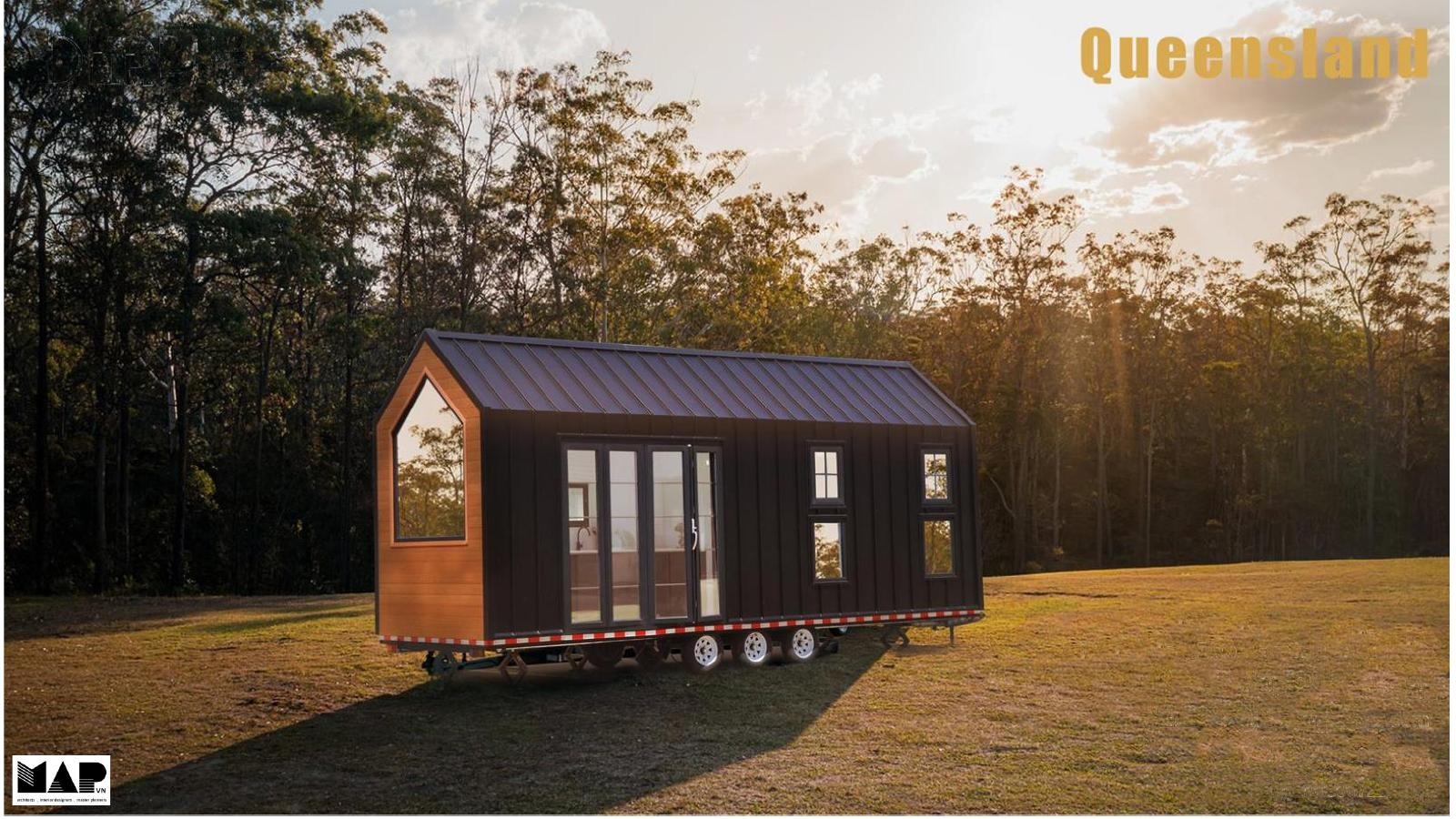
A tiny home is a broad market term for a compact dwelling. At Epic Tiny Homes, our range includes fixed-site modular tiny homes and tiny homes supplied on purpose-built trailers. A fixed-site design can enter the normal planning and building approval system. A trailer model is treated differently because it remains a moveable asset and must also satisfy vehicle and registration requirements.
Tiny home on wheels
A tiny home on wheels is built on a trailer intended for road registration, subject to the applicable vehicle approval or RAV entry, mass, dimensional and state or territory registration requirements. It can offer mobility and a faster manufacturing pathway, but the presence of wheels does not automatically create a right to live in it permanently on any parcel of land. Vehicle registration, lawful towing, installation, servicing and residential land use are separate questions.
Mobile or moveable home
“Mobile home” and “moveable dwelling” are often used for caravans, relocatable homes and manufactured homes. NSW legislation draws distinctions between caravans that can be registered and relocatable or manufactured homes that are normally delivered in sections and installed at a site. Those distinctions affect design standards, approvals and where the home may be occupied.
Granny flat or secondary dwelling
A granny flat is generally a self-contained secondary dwelling established with a principal dwelling on the same lot. It can be attached, internal or detached. In NSW, an eligible secondary dwelling may follow a complying-development pathway, but it must satisfy planning, building, BASIX, site and certification requirements.
The easiest way to choose
Start with your intended use and property. Ask whether the home will be fixed to approved foundations, remain on a registrable trailer, be occupied permanently, be rented, or be moved periodically. Those answers are more useful than the label alone.